CBT, DBT, EMDR? What Does Any of This Mean?

You know you want to go to therapy.
You might even know exactly why. Maybe you're anxious all the time. You're struggling in a relationship. You're going through a major life change. You're feeling stuck, overwhelmed, or just not like yourself lately.
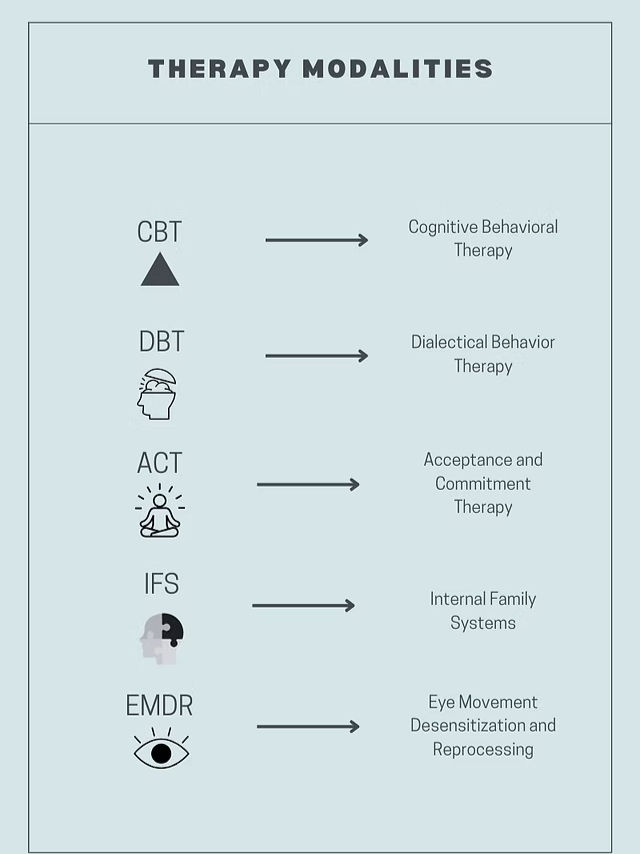
But then you start looking for a therapist and suddenly you're see lists of treatment modalities. CBT. DBT. IFS. ACT. Trauma focused therapy. Exposure therapy. And suddenly you're thinking: “I don't know!”
You don't need to know what type of therapy you need, a diagnosis, or perfectly organized before reaching out to a therapist. That's part of therapy and your therapist is for.
So how does a therapist know what approach to use?
During the beginning of therapy, you'll talk about what's bringing you in, what you've been experiencing, your history, your relationships, your goals, and so much more.
From there, your therapist can help determine what approaches may be helpful. Therapy doesn't look exactly the same from one person to another.
What if I don't like the way we're doing therapy?
If something doesn't feel helpful, you can talk about it.
If you want more practical tools, say so.
If you want more time to process, say so.
If you feel like you're talking in circles, say so.
If you're not sure what you need, say that too.
Your therapist isn't expecting you to sit quietly and accept whatever approach they choose.
Therapy is collaborative.
You don't need to have it all figured out
Maybe you've spent weeks researching therapists and treatment modalities and now feel even more overwhelmed than when you started.
Take a breath.
Treatment modalities are simply tools that can help support you in therapy. Our therapists are knowledgeable in a wide range of approaches, and we'll work with you to figure out what makes sense for your needs and goals. You don't have to have it all figured out. That's what we're here for.
*Image taken from mindandbodytc.com


Comments